Guide
Why swimsuits die, and the ten minutes that stop it
Chlorine, sun cream and a hot dryer kill more suits than swimming does. What the fibre is doing, what the care label is legally required to tell you, and the rinse that costs nothing.

A swimsuit does not usually wear out. It gets destroyed, slowly, by four things that have nothing to do with swimming: chlorine, sun cream, heat and time spent damp in a bag.
All four attack the same component, and it is the one that makes the suit a suit. Understand what elastane is doing and the whole care routine becomes obvious rather than a list of rules to memorise.
The fibre that is actually at risk
A swimsuit is mostly nylon or polyester, and somewhere between twelve and twenty five per cent elastane, which you will also see called spandex. The first fibre gives the fabric its surface and its strength. The second gives it everything you actually notice.
Elastane is a long coiled molecule. Stretch it and the coils straighten. Release it and they spring back. That spring is what pulls a suit against your body, and it is what fails first.
It fails by breaking the chemical links inside those coils. Once enough of them break, the fibre still stretches but no longer returns, and the suit goes baggy in the seat and slack at the strap. No wash fixes that, because nothing puts the links back.
So every rule below has one purpose: slow down the breaking of those links. Nothing here is about cleanliness.
| Blend on the label | Pieces listed | What it means for care |
|---|---|---|
| 82% Nylon, 18% Spandex | 17 | High stretch: rinse after every swim |
| 90% Polyester, 10% Spandex | 13 | Everyday stretch: rinse and dry flat |
| 85% Polyester, 15% Spandex | 9 | High stretch: rinse after every swim |
| 95% Polyester, 5% Spandex | 6 | Low stretch: holds shape, still no dryer |
| 80% Nylon, 20% Spandex | 3 | High stretch: rinse after every swim |
| 90% Polyamide, 10% Elastane | 2 | Everyday stretch: rinse and dry flat |
The counts come from the pieces in this catalogue that state a blend. The higher the elastane figure, the more of the garment is the part that is vulnerable, and the more the rinse below is worth doing.
Chlorine: the fastest of the four
Chlorine in a pool is there to oxidise things, and it does not distinguish between bacteria and the links inside your suit. Every hour in a treated pool costs some of them.
The damage is cumulative and roughly proportional to time and concentration. An hour a week in a lightly treated pool is a slow decline. Five sessions a week in a heavily treated one will visibly slacken a suit inside a season, and every regular swimmer discovers this eventually.
The single most effective thing you can do costs nothing and takes two minutes. Rinse the suit in cold fresh water immediately after swimming, before it dries. Chlorine that dries into the fabric keeps working. Chlorine rinsed out does not.
A second trick is worth knowing. Soak the suit in cold fresh water for a couple of minutes before you get in the pool. Fabric that is already saturated absorbs less of the treated water, which means less chlorine ends up inside it.
Neither of these makes a suit chlorine proof. Nothing does, at any price, and a shop that tells you otherwise is selling you something.
Sun cream, oil and the stains that will not come out
Sun cream is the second killer and the one people never suspect, because it does not feel like an attack. Mineral filters, especially zinc and titanium, bind to fabric and are extremely difficult to remove once they set.
On a white or light suit the result is a yellow or orange cast around the neckline and the straps. On a dark suit it shows as a pale bloom. Either way it is inside the fibre, not on it, and that is the reason ordinary washing does not shift it.
The prevention is timing. Put sun cream on, then wait fifteen minutes before you put the suit on. Cream that has absorbed into skin has much less left over to transfer.
If a transfer happens anyway, rinse immediately in cold water and do not use hot water on it. Heat sets these stains permanently, which is a general truth about stains and an especially unforgiving one here.
One-piece suits, rated by the people who bought them
All one-piece



Heat: the dryer, the radiator and the car
Heat does to elastane in twenty minutes what a season of swimming does gradually. A tumble dryer is the fastest way to ruin a swimsuit that exists in an ordinary house.
The mechanism is simple. Heat relaxes the fibre while the drum stretches it, and the fibre sets in the stretched state. It comes out looking fine and never recovers its grip.
Radiators, hot windowsills and the parcel shelf of a car in July all do the same thing more slowly. So does wringing a suit out hard, which stretches the fibre while it is at its weakest.
What works instead: press the water out between two palms or roll the suit in a towel and press. Then dry it flat, in shade, out of direct sun. Hanging a wet suit by its straps stretches the straps under the weight of the water, which is exactly the part you cannot afford to lose.
The bag, and the twelve hours that finish the job
A wet suit rolled into a towel and left in a bag overnight is the most common single mistake we hear about. Warm, dark and damp is the ideal condition for the mildew that stains fabric permanently and for the smell that never leaves.
If you cannot rinse and dry at the pool, at least get the suit out of the bag when you get home, even if you only drape it over a rail. Twelve hours makes the difference between a suit that smells of chlorine and one that smells of a cellar.
Two suits in rotation solve this better than any product. Elastane needs about a day out of use to recover fully, and a suit that never gets one goes slack in a fortnight regardless of how carefully you wash it.
What the care label is legally required to tell you
Care labels are not marketing. In the United States they are governed by a Federal Trade Commission rule, and the rule is specific about what a label is and what it has to survive.
Care label means a permanent label or tag, containing regular care information and instructions, that is attached or affixed in such a manner that it will not become separated from the product and will remain legible during the useful life of the product.
Federal Trade Commission, 16 CFR Part 423, Care Labeling of Textile Wearing Apparel
Permanent and legible for the useful life of the product. That is why the label is sewn in rather than printed on, and it is why cutting it out on the second day is a decision you may regret in year two.
The rule also requires a warning where a reasonable cleaning method would damage the garment:
To fail to warn a purchaser, prior to sale, when any part of the prescribed regular care procedure, which a consumer or professional cleaner could reasonably be expected to use, would harm the product or others being cleaned with it;
Federal Trade Commission, 16 CFR Part 423, Care Labeling of Textile Wearing Apparel
That is the legal basis of the phrase you see on almost every swimsuit: do not tumble dry. It is not a suggestion and it is not there to protect anyone but you. It is there because the manufacturer had to tell you.
There is one more provision worth knowing, because it tells you how much weight to give the label:
To fail to possess, prior to sale, a reasonable basis for all regular care information disclosed to the purchaser.
Federal Trade Commission, 16 CFR Part 423, Care Labeling of Textile Wearing Apparel
A manufacturer must hold a reasonable basis for what the label says. The label is therefore a better guide than anything you will read on a forum, including this page.
The routine, in order
- Before swimming: soak the suit in cold fresh water for two minutes.
- Sun cream on skin fifteen minutes before the suit goes on.
- Straight after swimming: rinse in cold fresh water, before anything dries.
- Press the water out in a towel. Never wring and never hang by the straps while heavy.
- Dry flat, in shade. Not on a radiator, not in a car, not in a dryer.
- Every few wears: hand wash in cold water with a small amount of mild detergent.
- Rotate two suits so each gets a day off.
That is the whole of it. Steps three and five do most of the work, and they take about four minutes between them.
Two-piece sets in the range
All bikinis



Machine washing, if you are going to do it anyway
Hand washing is better and most people will not do it every time. So here is the least damaging way to use a machine.
- Cold water only. Not warm, not thirty degrees because it seems gentle. Cold.
- Delicate or hand wash cycle, lowest spin the machine offers.
- Inside a mesh bag, on its own or with other soft items. Never with towels, and never with anything that has a zip or a hook.
- A small amount of mild liquid detergent. No fabric softener, which coats the fibre and stops it recovering.
- No bleach of any kind, including the oxygen sort sold as colour safe.
- Out of the machine as soon as it stops, then dried flat.
Fabric softener deserves the emphasis. It is designed to leave a lubricating film on fibres, which is pleasant on a towel and disastrous on elastane, where it interferes with exactly the recovery you are trying to protect.
The same rules, applied to shorts and leggings
Activewear is the same problem with less water. Sweat is salt and acid, and it does to elastane over months what pool water does over weeks.
The differences are small. Wash sooner rather than later, because sweat left in fabric keeps working. Wash inside out, which puts the sweat side against the water. Skip the softener for the same reason as above.
Heat matters just as much here. The reason a favourite pair of leggings goes baggy at the knee after a year is usually the dryer rather than the wearing.
One extra habit is worth having for shorts with a liner: turn them inside out to dry, because the liner is the slowest part to dry and the part that will hold a smell if it stays damp.
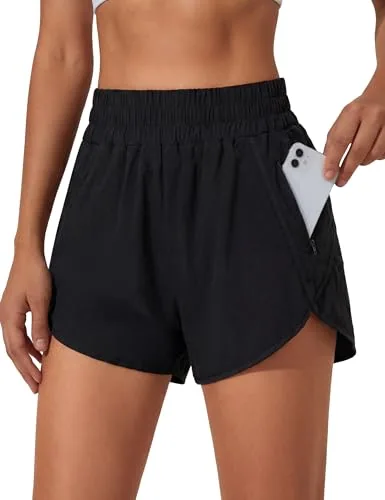
Shorts with liners and zip pockets
All shorts


Salt water, sand and the sea
Sea water is gentler on elastane than a treated pool and harder on everything else. Salt crystals form as the fabric dries, and those crystals are abrasive. Every movement afterwards grinds them against the fibre.
That is why a suit worn in the sea and not rinsed feels stiff the next morning. The stiffness is salt, and the abrasion is real damage rather than a texture.
Sand is worse and more obvious. It works into seams and into the gathers of a ruched front, where it stays through a wash unless you shake the suit out first. In a light coloured suit trapped sand shows as grey shadowing along the seam.
The routine is the same as for chlorine with one addition. Shake the suit out hard before it goes anywhere near water, because rinsing sand in simply moves it deeper into the seams.
Rocks and concrete pool edges deserve a warning of their own. Sitting on a rough surface in a swimsuit is the single fastest way to pill the seat of it, and no fabric on the market resists that. A towel under you costs nothing.
Hot tubs, and why they are the worst case
A hot tub combines the two things elastane likes least: heat and a high chlorine or bromine concentration in a small volume of water.
Warm water accelerates the chemistry. The same dose of chlorine at forty degrees does considerably more damage than at twenty five, and hot tubs are usually treated harder than pools because the warmth suits bacteria too.
If you use a hot tub regularly, keep one suit for it and accept that this suit is consumable. It is a much cheaper decision than slowly destroying the suit you like.
Rinse immediately afterwards, in cold water, without exception. This is the one situation where waiting until you get home genuinely costs you a season.
Storing a suit through the winter
How a suit is stored between seasons decides what state it is in when you next want it, and the rules are short.
- Completely dry before it goes away. Not nearly dry. Damp fabric in a drawer for six months grows things.
- Flat or loosely folded, never on a hanger. Six months hanging stretches straps under their own weight.
- Out of direct light. Ultraviolet degrades elastane whether or not anyone is wearing it.
- Away from wood that has been treated, and away from mothballs. Both leave a smell that fabric holds.
- Not in a sealed plastic bag unless it is genuinely dry, and even then a cotton bag is better because it breathes.
A suit put away clean and dry in October comes out in May exactly as it went in. A suit put away damp comes out spotted, and no wash removes those spots.
Colour, print and what fades first
Fading is the damage people notice first, and it follows rules that are worth knowing before you choose a colour rather than after.
Ultraviolet light breaks down dye, and it does not do so evenly. Reds and bright pinks go first because their dye molecules are the least stable under UV. Black holds longer but shifts towards a dusty grey-brown rather than staying black. Navy and dark green are the most stable of the common colours.
Chlorine bleaches on top of that, and it attacks the same colours in roughly the same order. A red suit worn twice a week in a pool will look noticeably tired next to a navy one bought on the same day.
Prints behave differently from solids. A printed pattern sits closer to the surface than a dyed solid, so it fades faster and more visibly, and a faded print looks worse than a faded solid because the contrast between its colours drops unevenly.
None of this is an argument against buying a red suit. It is an argument for knowing which of your suits is the one you take to the pool three times a week, and letting that be the navy one.
There is one habit that slows all of it down and costs nothing: dry in shade rather than in sun. A suit dried on a sunny balcony every day is getting a UV dose while it dries that is comparable to the dose it got while being worn.
Detergent: what it has to do and what it must not
Swimwear asks almost nothing of a detergent. There is no ground-in dirt in a swimsuit and there is no grease worth the name. What there is, after a swim, is dissolved chlorine or salt, a film of sun cream and a little body oil, and all three come out with cold water and a small amount of a mild liquid.
That last word matters. Powder detergents are built around alkaline builders that soften water and lift soil, and they do it by being aggressive. Liquid detergents sold for delicates or for sports fabric are milder and rinse cleaner, and rinse residue is what leaves a suit stiff.
Use less than the packet says. The doses printed on a bottle are set for a full drum of dirty cotton, and a single swimsuit in a sink needs a fraction of that. Too much detergent does not clean better. It simply stays in the fibre and attracts the next dose of grime.
Three products should never go near elastane. Chlorine bleach, for the obvious reason. Oxygen bleach, because it is still an oxidiser however gently it is marketed. And fabric softener, which coats the fibre with a lubricant that stops it snapping back.
If a suit smells of chlorine after washing, that is chlorine still in the fibre rather than a cleaning failure. A second cold soak fixes it. More detergent does not.
Seams, linings and the parts that go before the fabric does
A suit is not one fabric. It is an outer shell, a lining, elastic at every edge, and thread holding all three together. Each ages at its own speed, and the outer fabric is often the last to show it.
Elastic at the leg opening goes first in most suits. It is a narrow band under constant tension, and it takes the worst of the chlorine because it sits where water pools when you sit down. When it goes wavy, the suit still fits and still covers, but the leg line stops lying flat against the skin.
The lining goes next, and it goes quietly. Lining fabric is lighter than the shell, and once its elastane fails the suit can turn faintly transparent when wet while looking perfectly fine dry. This is the change people do not notice until someone else does.
Seams last longest but fail worst, because a seam that opens in water is the end of a swim. The stress points are the crotch seam and the strap attachments, and the thing that opens them is the wringing described earlier rather than the swimming.
None of this is a reason for alarm. It is a reason to check a suit at the start of a season rather than at the pool: hold it to the light, stretch the leg elastic, look at the strap seams. Two minutes, once a year.
Five things that are told to people and are not true
Vinegar sets the colour
It does not, on synthetic fabric. Vinegar can help with some dyes on natural fibres. Nylon and polyester swimwear is dyed by a different process entirely, and a vinegar soak does nothing useful to it while adding an acid your elastane could do without.
Salt water is fine, it is natural
Salt is abrasive once it crystallises, and sea water carries sand. A suit worn in the sea needs the same rinse as one worn in a pool, for different reasons.
Chlorine resistant fabric solves it
Some fabrics resist chlorine much better than others, and a dedicated training suit made from one is a sensible purchase for a daily swimmer. Resistant is not proof, and none of it removes the need for a rinse.
A quick spin in the dryer on low is harmless
Low heat is still heat, and the drum is still stretching the fabric while it is warm. This is the single most damaging habit on the list and the one people are most confident about.
If it still fits, it is still fine
Fit is the last thing to go, not the first. Transparency when wet and a wavy leg elastic both arrive before a suit stops fitting, and both are visible to anyone standing behind you.
What a suit should reasonably last
A suit worn on holiday a few weeks a year, rinsed and dried flat, should look good for several seasons. A suit worn several times a week in a treated pool will slacken within one, and that is not a fault.
Knowing which of the two you are is the useful part. A regular pool swimmer should expect to replace suits and should buy accordingly rather than treating it as a failure.
The signs that a suit is finished are specific. It no longer returns to shape when stretched and released. The fabric looks slightly transparent when wet where it did not before. The elastic at the leg has gone wavy rather than flat. One of those on its own is survivable. All three together mean the suit has done its work.
The sizing guide on this site covers how to buy the replacement, and the sun guide covers what to wear over it between swims.
Sources we read
| Source | Published by | Read |
|---|---|---|
| 16 CFR Part 423, Care Labeling of Textile Wearing Apparel | Federal Trade Commission | 4 September 2026 |