Guide
How BMJL sizing works, and how to measure yourself once
Ten minutes with a tape measure settles a year of guessing. Here is what our sizes mean, where the range runs small, and what the fabric line has to do with fit.
There is no national clothing size in the United States. There is no legal definition of a medium, no agency that checks one, and no requirement that two brands mean the same thing by the word. Every apparel company sets its own measurements and publishes them, and that is the whole reason a size chart exists.
So the honest version of this guide is short: measure yourself once, write the three numbers down, and read a chart before every order. Everything below is the long version, department by department, with what we have learned from the questions people send us.
Measure yourself once, properly
You need a soft tape and a mirror. Wear the underwear you would normally wear under the garment, because a padded bra changes a bust measurement by an inch and a half and that is a whole size in most charts.
- Bust. Around the fullest part, tape level all the way round, arms down. Breathe out normally. Do not pull it tight.
- Natural waist. The narrowest part of your torso, usually an inch above the navel. Bend to one side and the crease that forms is the place.
- Hips. Around the fullest part of the seat, usually seven to nine inches below the waist. Feet together.
- Inseam, if you buy shorts. From the crotch seam of trousers that fit you down to where you want the hem to land.
Two mistakes account for most of the wrong sizes we hear about. The first is measuring over jeans, which adds an inch at the waist and two at the hip. The second is holding the tape tight in the belief that a firm number is a truer one. The tape should sit flat and not dent the skin.
Write the numbers on a note in your phone with the date. Bodies change and so do the numbers, but not so fast that you need to measure monthly. Once a year is plenty for most people.
Which sizes this range actually comes in
The letters below are the ones the range is built on. Not every style exists in every letter, and the count next to each one is the number of pieces we currently list in it.
| Size | Pieces listed |
|---|---|
| X-Small | 5 |
| Small | 62 |
| Medium | 109 |
| Large | 109 |
| X-Large | 37 |
| XX-Large | 14 |
The middle of the range is where the choice is. Small, medium and large carry most of the catalogue, and the two ends carry considerably less. If you sit at X-Small or XX-Large, filter by your size first and choose a style second, because doing it the other way round leads to disappointment.
The distribution is not a judgement about bodies. It is what the maker produces, and we would rather show the count than let an empty filter surprise you.
Where each department runs, in one table
The same letter behaves differently on a bikini bottom and on a pair of flare trousers. The table below shows how many pieces we list per size in each department, which tells you where the depth is.
| Department | XS | S | M | L | XL | XXL | Pieces |
|---|---|---|---|---|---|---|---|
| Shorts | 2 | 7 | 12 | 12 | 5 | 22 | |
| Bikinis | 2 | 8 | 13 | 23 | 3 | 1 | 32 |
| One-Piece | 3 | 12 | 11 | 10 | 5 | 29 | |
| Cover-Ups | 1 | 8 | 10 | 7 | 5 | 1 | 16 |
| Leggings | 8 | 8 | 7 | 2 | 17 | ||
| Tops | 5 | 7 | 7 | 1 | 1 | 17 | |
| Tankinis | 1 | 6 | 1 | 1 | 8 | ||
| Dresses | 7 | 6 | 6 | 5 | 14 |
Read it as availability, not as fit advice. A department with sixty pieces in medium gives you sixty chances to find one that suits you. A department with four gives you four.
Shorts, sorted by how many people have rated them
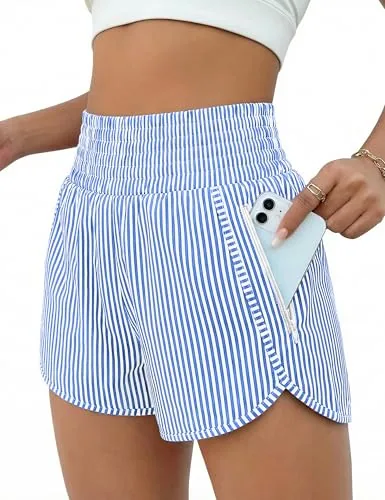
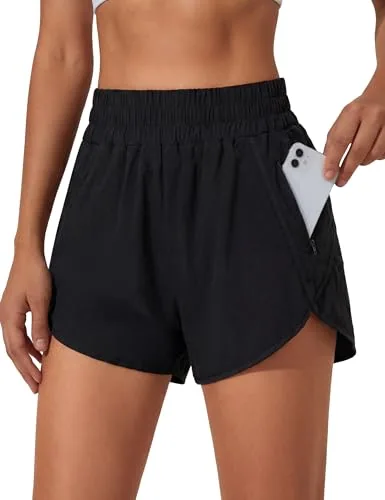
All shorts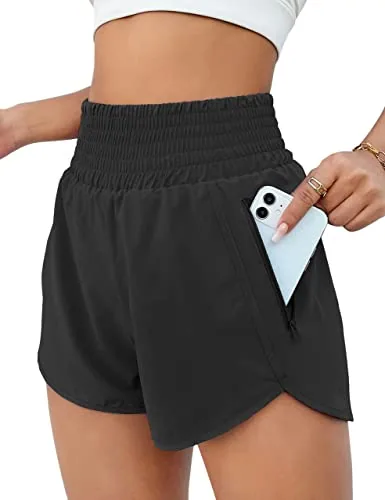

Swim: the two measurements that matter
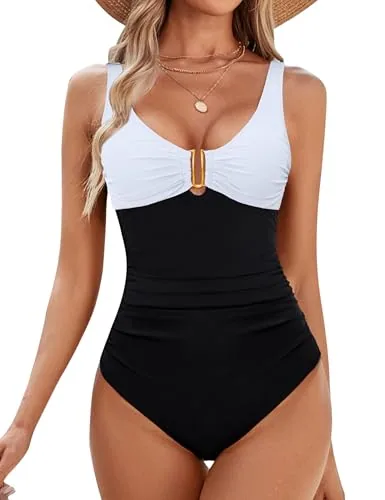
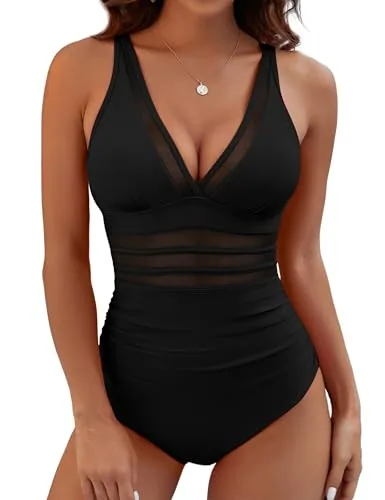
For a one piece, torso length decides more than bust or hip. A suit is a loop that has to travel from your shoulder, down the front, under and back up. If your torso is long, a suit sized to your bust will pull down at the shoulders and up at the leg.
There is a quick test that costs nothing. Hold the suit at the shoulder seam and let it hang. Run the tape from the shoulder seam down the front, under the gusset and back up to the same seam. Compare it with the same journey around your own body, over the underwear you will wear. If the suit is shorter by more than two inches, size up or choose a suit with adjustable straps.
This is why so many suits in this range have adjustable straps and why we list them on the page. Adjustment covers a range of torso lengths that a fixed strap cannot, and it is the single most useful feature on a swimsuit for anyone who is tall or short in the body rather than in the leg.
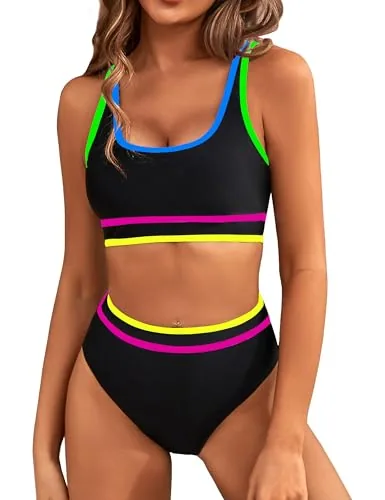
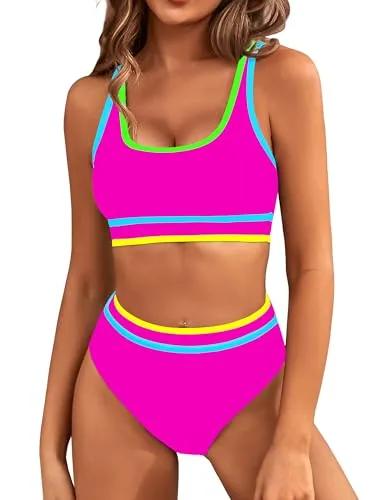
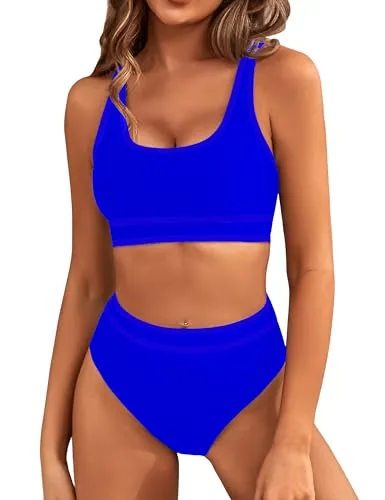
For a two piece, the top and the bottom answer separately. Buy the top to your bust and the bottom to your hip, and if a set only comes as one size for both, buy for whichever of the two you mind more about.
One-piece suits with adjustable straps or ruching
All one-piece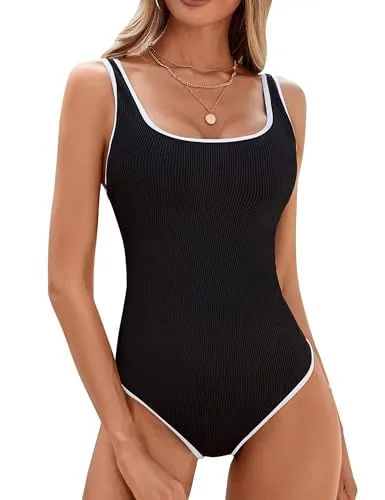
Shorts: inseam is the size that matters
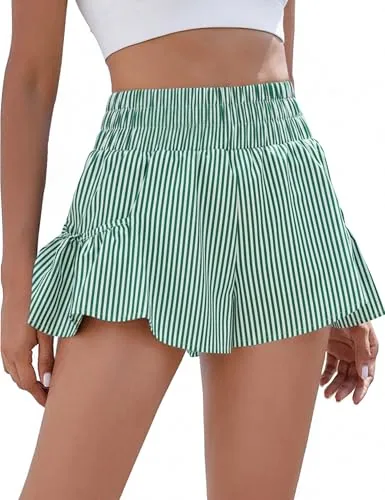
The letter on a pair of shorts tells you about the waist. The inseam tells you about everything else, and it is the number people forget to check.
Two and a half inches is a running length. It sits high on the thigh, it does not ride when you stride, and it looks like exactly what it is. Three to five inches is the walking and gym length, and it is what most people actually want when they say they want shorts. Anything longer reads as a casual short and behaves like one.
If you do not know what you like, measure a pair you already own from the crotch seam to the hem and use that number. It is more reliable than looking at photographs, because a photograph of a five foot ten model in a three inch short is not a photograph of a three inch short on you.
The other decision is the liner. A double layer pair has an inner short that stops the outer layer riding up on the thigh. Without it, a loose outer layer will ride, and no waist size fixes that. Where a pair has a liner, its page lists it under lining.
What the fabric percentages are telling you
Every page in this range carries a fabric line that looks like a formality: ninety per cent of one thing, ten per cent of another. It is not a formality. It is a legal disclosure, and it is the most useful sentence on the page for anyone deciding between sizes.
The Federal Trade Commission sets out what has to be named:
the respective generic names of all fibers present in the amount of 5 per centum or more of the total fiber weight of the textile fiber product shall be used when naming fibers in the required information
Federal Trade Commission, 16 CFR Part 303, Textile Fiber Products Identification Act
That five per cent threshold explains something people find strange. A garment can contain a fibre that does real work and never name it, because anything under five per cent disappears into a different label:
no fiber present in the amount of less than 5 percent of the total fiber weight shall be designated by its generic name or fiber trademark in disclosing the constituent fibers in required information, but shall be designated as “other fiber.”
Federal Trade Commission, 16 CFR Part 303, Textile Fiber Products Identification Act
For fit, the number to read is the elastane content, which appears as spandex or elastane on the label. It is the stretch. Below about five per cent a garment holds its shape and forgives very little, so buy your measured size. Between five and twenty per cent it stretches and recovers, which is the range almost all activewear lives in, and where sizing down by one is a defensible choice if you want compression.
Above twenty per cent you are in swimwear territory, where the fabric has to stretch wet as well as dry. Wet fabric is heavier and behaves differently, and that is the reason a suit that fits perfectly in a changing room can feel loose after ten minutes in a pool.
| Fabric blend | Pieces listed |
|---|---|
| 82% Nylon, 18% Spandex | 17 |
| 90% Polyester, 10% Spandex | 13 |
| 85% Polyester, 15% Spandex | 9 |
| 95% Polyester, 5% Spandex | 6 |
| 80% Nylon, 20% Spandex | 3 |
| 90% Polyamide, 10% Elastane | 2 |
| 82% Polyester, 18% Spandex | 1 |
| 82% Polyamide, 18% Elastane | 1 |
The table is counted from the pieces in this catalogue that state a blend. Where a piece does not state one, we leave the line off its page rather than guessing from the look of the photograph.
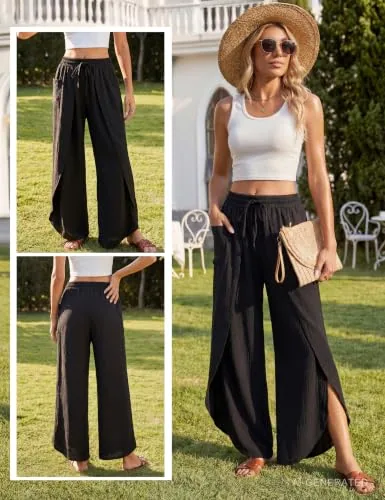
High waisted leggings and flare pants
All leggings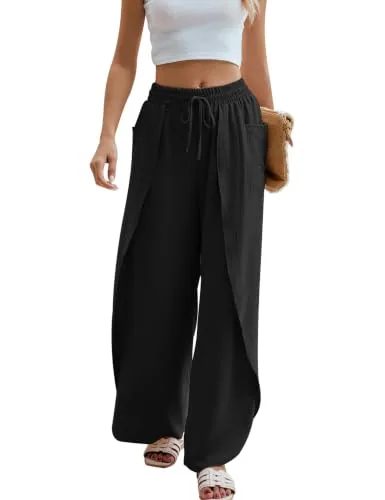
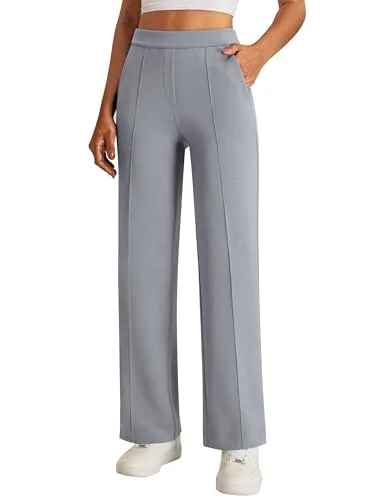
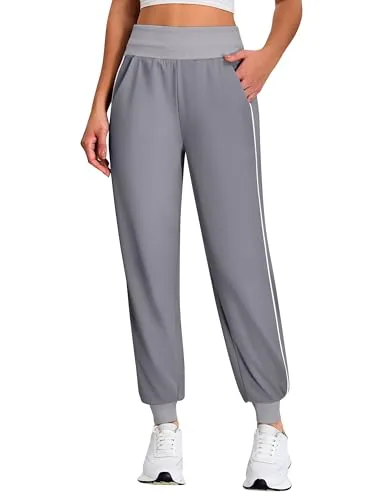
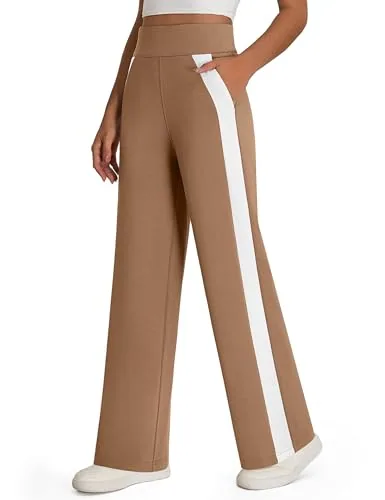
What to do when you are between sizes
Nearly everyone is between sizes on at least one measurement. Here is the order we would decide in.
- Swimsuits. Size up. A suit that is slightly big is annoying. A suit that is slightly small cuts at the leg and shoulder and gets worn once.
- Leggings and compression shorts. Size down if the fabric has ten per cent elastane or more and you want it to hold. Size to your measurement if you do not.
- Loose shorts and cover ups. Size to your waist and ignore the hip, because these cuts are not fitted there anyway.
- Tops with a built in bra. Size to your bust. The shelf is the part that has to fit, and a size up makes it useless.
One more rule, learned the hard way from the letters we get. If two departments give you two different letters, believe the tape rather than the pattern. Buying a medium everywhere because you are usually a medium is how a wardrobe ends up with three things that never get worn.
How to read a product photograph without being misled
Every photograph on this site is the maker's own, taken on a model whose measurements we do not know. That is worth saying plainly, because a photograph is the single most persuasive and least reliable piece of information in online clothing.
Three things distort what you see. The first is height. A five inch inseam on a tall model reads as a short short. The same garment on someone eight inches shorter reads as a mid thigh. Nothing about the garment changed.
The second is the pin. Studio shots are routinely clipped at the back so the front hangs cleanly. You cannot see the clip, and the effect is a garment that appears to fit better than it will out of the bag. This is normal practice across the industry and it is not deception, but it does mean the drape you see is the best case.
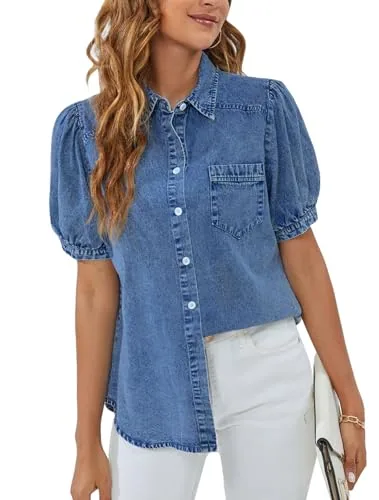
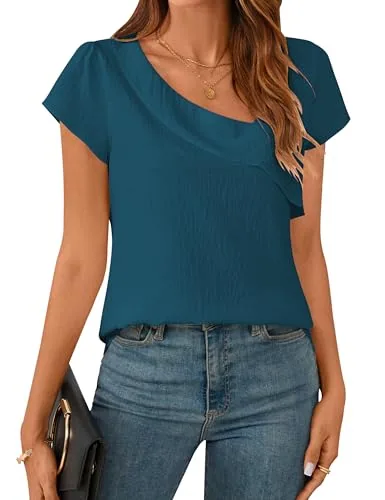
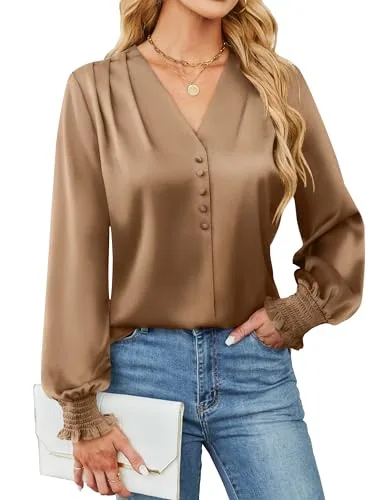
The third is the crop. Many of the frames in this catalogue show a torso or a pair of legs rather than a whole person, which is efficient for showing detail and useless for judging proportion. When a frame is cropped, look at the specification instead of the picture.
The practical habit is to read in this order: your tape measurements, then the size table, then the fabric line, then the photographs. Reversing that order is how most wrong orders happen.
Why the same letter means different things everywhere
People assume that a medium ought to be a fixed thing and that brands are being difficult. The truth is duller. There is no standard to be difficult about.
American clothing sizes started life as a voluntary commercial standard based on a mid twentieth century survey, and it was withdrawn decades ago. Nothing replaced it as a requirement. What exists now is a set of voluntary industry guidelines that companies may follow, adapt or ignore, and most adapt them to the body they actually sell to.
That is why a brand selling mostly to runners and a brand selling mostly to holidaymakers will put different measurements behind the same letter, and both are being honest. The letter is a label on a box, not a measurement.
It also explains the one piece of advice that survives every trend: the chart beats the letter, always. A brand that publishes measurements is telling you what it means. A brand that publishes only letters is asking you to guess.
We publish the sizes each piece exists in, and the department tables above show where the depth is. For body measurements behind each letter, the retail partner's own chart for that item is the authority, because it is the one the maker filled in.
Tops, shelf bras and the measurement people skip
A top with a built in bra is really two garments in one, and they fit by different rules. The outer layer fits your bust and shoulders. The shelf fits your underbust.
Underbust is the measurement almost nobody takes for a top, and it decides whether the shelf sits where it should. Run the tape directly under the bust, level, snug but not tight. If that number is at the small end of your usual size, the shelf will hold. If it is at the large end, expect the band to sit lower than the picture.
Removable pads change this too. A pad adds shape and takes up room, so a top that fits with pads in can be loose with them out. Every piece here that has removable pads says so on its page under padding, and taking them out is a legitimate way to buy a slightly small top.
What a shelf bra is not is a support garment for impact. It is comfort and coverage. If you run, look for a piece described as a sports bra and treat the shelf tops as what they are, which is a t-shirt that saves you a layer.
Tops with built-in shelf bras
All tops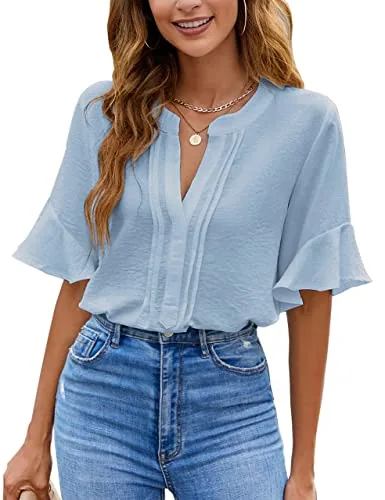
What happens to fit when the fabric gets wet
Swim fabric behaves differently wet, and the change is large enough that people blame the size for it.
Water adds weight. A one piece that weighs a few ounces dry carries noticeably more when it comes out of a pool, and that weight pulls down at the shoulders. This is why a suit can feel perfect in a changing room and loose at the straps twenty minutes later, and it is also why adjustable straps are worth choosing.
Elastane also relaxes as it warms. Body heat and warm water both soften the recovery of the fibre for as long as they last, which is temporary and completely normal. A suit that feels slack after an hour in a hot tub is not a suit that has failed.
What is not normal is a suit that never returns to shape once it has dried flat. That is the fibre giving up, and the care guide on this site covers the three things that cause it faster than anything else.
The practical consequence for sizing is simple. Buy a swimsuit to fit snugly dry, not comfortably dry. Comfortable dry becomes loose wet, and loose wet is the condition in which suits get lost in surf.
Colour, and why the list on a page is short
A style may have been produced in a dozen shades. The list on its page names the ones we can currently confirm, which is usually fewer, and it changes through a season as shades sell out.
This matters for sizing more than it sounds. Colours often sell out unevenly by size, so the shade you want may exist only in the letter next to yours. Filtering by size first and colour second saves the disappointment.
If a colour is not named on the page, we could not confirm it. That is a statement about our information rather than about the garment.
The questions we actually get
I am a medium on top and a large on the bottom. What do I buy?
Two pieces where the set allows it, and the larger of the two where it does not. A bikini bought as separates solves this completely, which is one of the few real advantages a two piece has over a one piece.
Do these run small?
Some styles do and some do not, and a single sentence covering a range this wide would be a lie. The reliable move is the tape and the chart for that specific item. Where a piece states an inseam, that number is the most honest thing on its page.
Will a size up fix a short torso?
No. A size up adds width, not length, and a suit that is wide and still short pulls in exactly the same place while gaping at the bust. Look for adjustable straps instead.
How do I know a pair of shorts has a liner?
Its page lists lining when the maker states it. If the line is absent, we could not confirm one, and the safe assumption is that there is none.
Can I wear athletic shorts in the sea?
You can, and cotton blends will hold water for an hour afterwards. The pairs in this catalogue described as swim or board shorts are cut from quick drying fabric and filtered separately in the shorts department.
What if the size chart and the reviews disagree?
Weight the chart for the body measurements and the reviews for the behaviour. A chart tells you what the garment measures. Reviews tell you what happens after four washes, which no chart can.
A short list worth keeping
- Bust, waist, hip and inseam, written down with a date.
- Read the chart for the item, not the letter you usually wear.
- Elastane under five per cent means buy your measurement. Ten per cent or more means you have a real choice.
- Swimsuits: snug dry, adjustable straps if your torso is long.
- Shorts: choose by inseam and check for a liner.
- Filter by size first when you are at either end of the range.
None of this is complicated and all of it takes one evening to set up. After that, ordering clothes online stops being a gamble and becomes arithmetic, which is a much better game.
Where to go from here
Once you have your three numbers, the rest of this site is a filter. Every department page lets you narrow by size before anything else, which is the order that wastes the least time.
Two other guides carry on from this one. The care guide covers what chlorine, salt and a hot dryer actually do to the elastane you just read about, and it is the difference between a suit that lasts one season and one that lasts three. The sun guide covers what a cover up does and does not do about ultraviolet light, which is a question about weave rather than about size.
Two-piece sets, top and bottom sized separately
All bikinis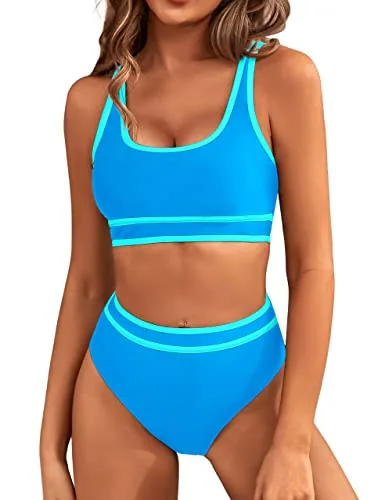
Sources we read
| Source | Published by | Read |
|---|---|---|
| 16 CFR Part 303, Textile Fiber Products Identification Act | Federal Trade Commission | 4 September 2026 |